
What Is Client-First? A Guide to Building Better Webflow Websites
When investing in a website, most businesses focus on the final design. But what happens behind the scenes is just as important. A website should be easy to update, simple to maintain, and flexible enough to grow with your business. That's exactly what Client-First was created to achieve by Finsweet.
Developed by the Webflow agency Finsweet, Client-First is a standardized set of guidelines and naming conventions for building websites in Webflow. Rather than changing how websites look, it changes how they're built. Making projects more organized, scalable, and easier for both developers and clients to work with. At this moment, Client-First has become the most widely adopted development methodology in the Webflow community, used by freelancers, agencies, and in-house teams around the world.
Why Was Client-First Created?
Before Client-First, every Webflow developer had their own way of building websites. Different naming conventions, project structures, and development styles made it difficult for someone else to understand or maintain an existing project. Even simple updates often required learning an entirely new system. This is where Client-First shines. Finsweet developed Client-First to solve this problem. By introducing a consistent structure and shared language, websites became easier to understand, collaborate on, and maintain, regardless of who originally built them. Instead of every project being unique behind the scenes, Client-First creates a predictable foundation that any Webflow developer can quickly navigate.
A Shared Language for Webflow Development
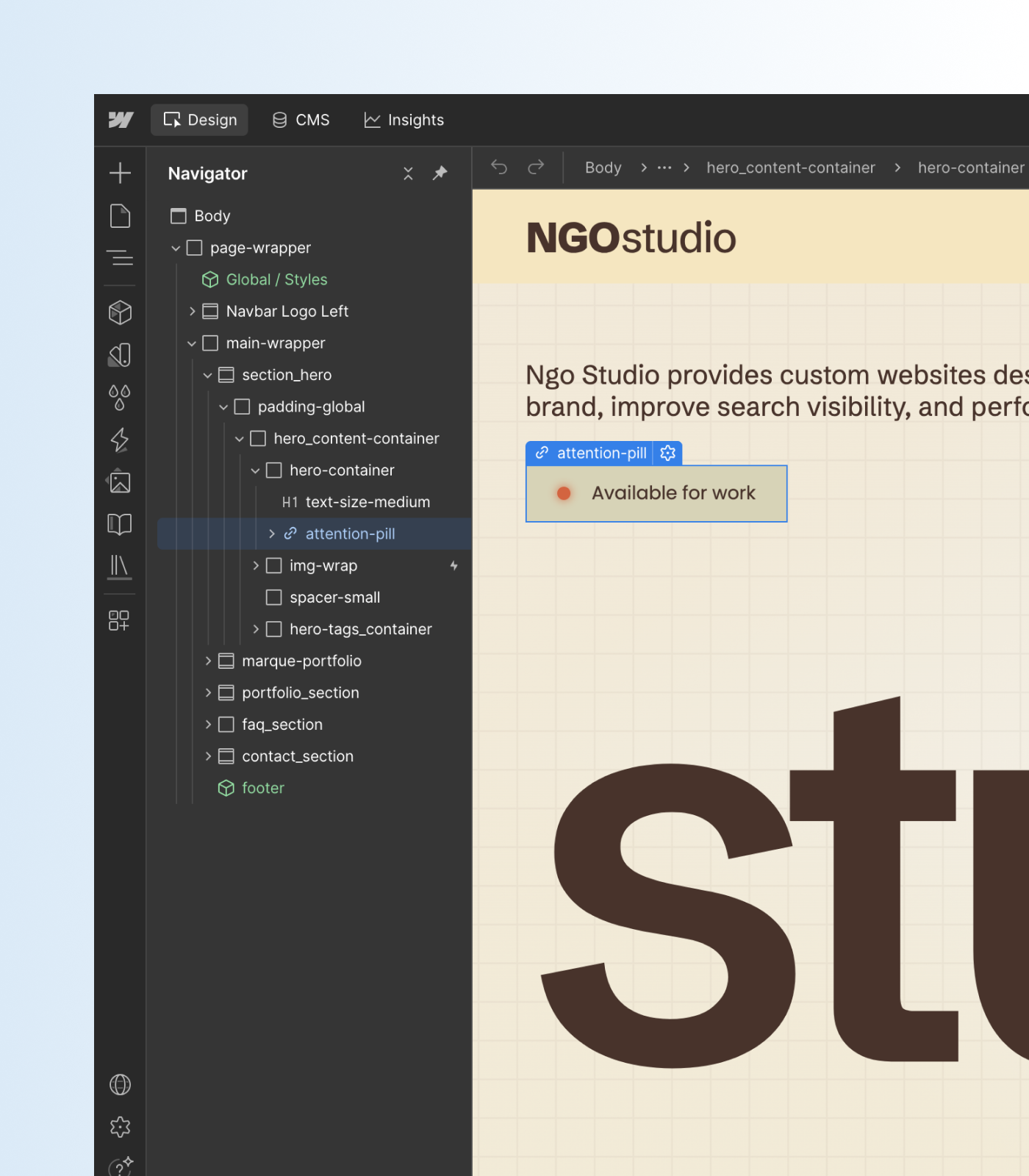
One of Client-First's biggest advantages is consistency. Every class, component, and section follows clear naming conventions that are designed to be descriptive and easy to understand.
Rather than using vague class names like:
div-block-69, wrapper-copy or blue-button-final
Client-First encourages meaningful names that describe an element's purpose. This makes projects easier to read and reduces the guesswork involved in future updates. Because so many agencies and developers use Client-First, it's become a shared common language across the Webflow community. New team members can quickly understand how a project is organized without spending hours going through and trying to understand someone else's workflow (Zzzz).
Built to Scale
A website shouldn't become more difficult to manage as it grows. Whether you're adding new landing pages, expanding your blog, or launching new services, your website should scale without becoming disorganized. Client-First achieves this through a consistent project structure. Pages, sections, components, and classes are organized in a predictable way, making it easy to add new content while keeping the project clean and maintainable. For businesses, this means your website can continue evolving without needing to rebuild its underlying structure.
Reusable Components Save Time
Most websites contain elements that appear repeatedly, such as:
- Navigation bars
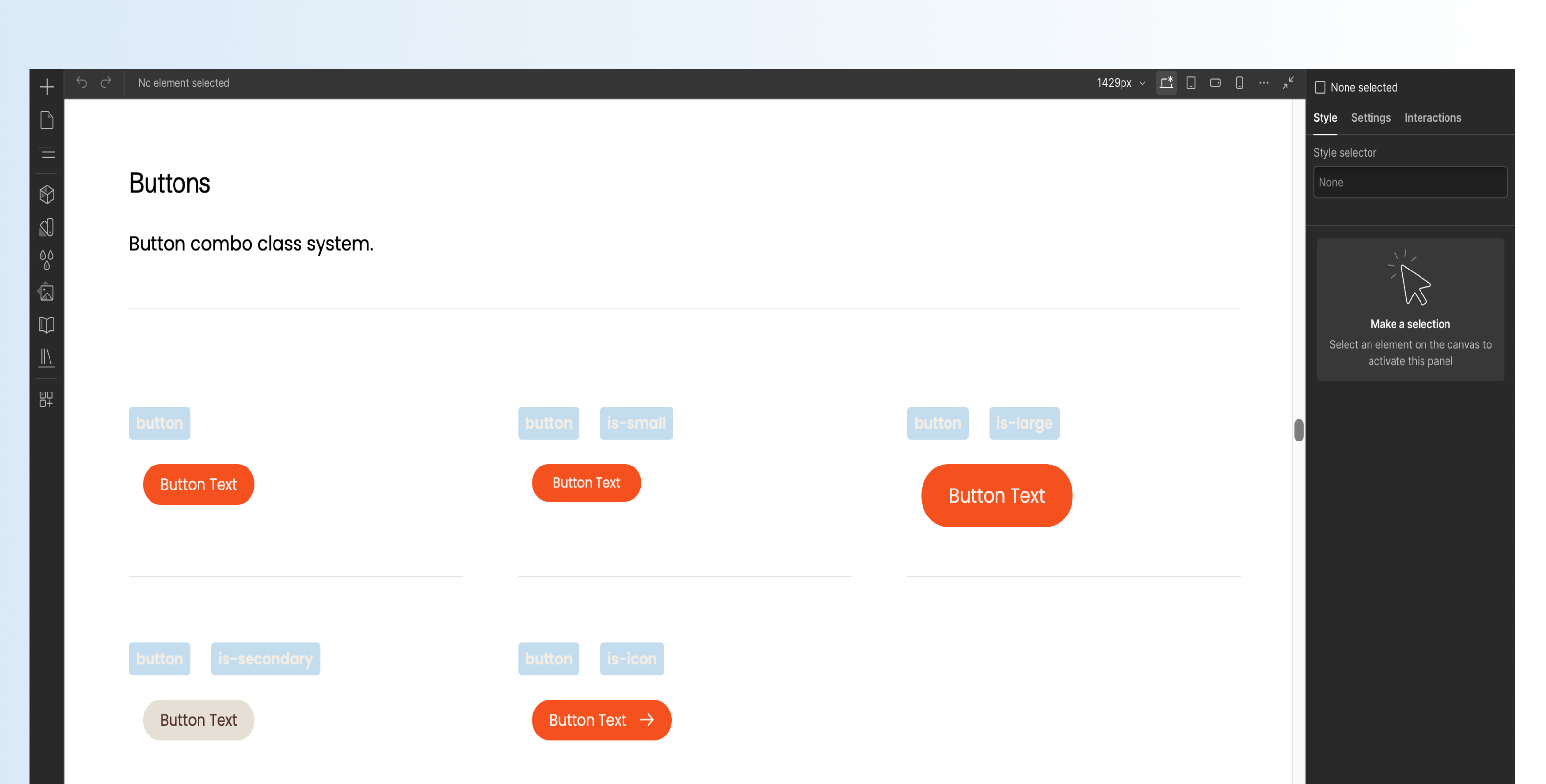
- Buttons
- Cards
- Testimonials
- Contact forms
- Call-to-action sections
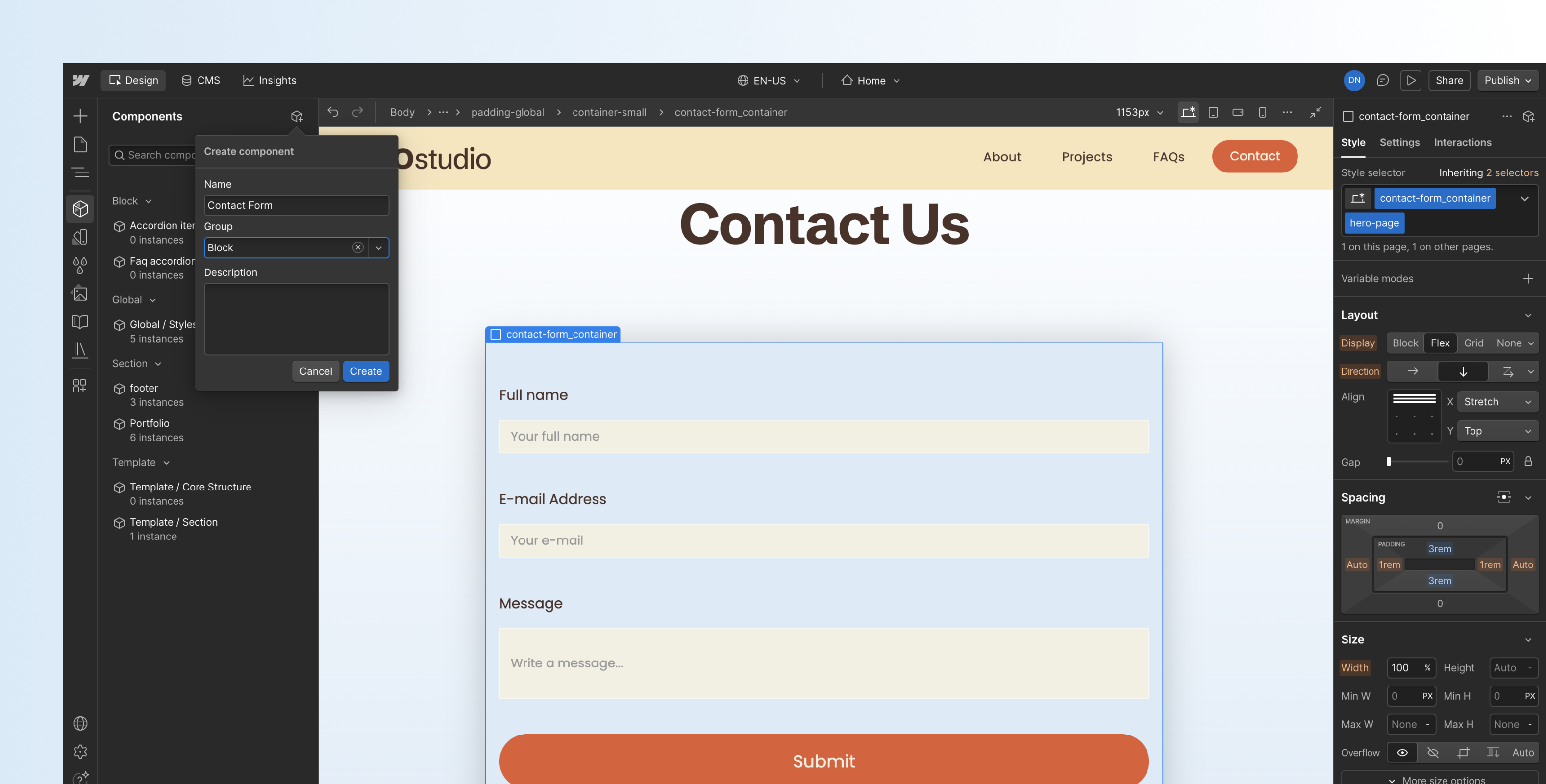
With Client-First, these elements are built as reusable components. Instead of recreating the same section multiple times, developers can reuse existing components throughout the website. This speeds up development, keeps the design consistent, and makes future updates much simpler. If a component needs to change, the update can often be applied everywhere it's used, reducing maintenance and improving consistency.
Responsive by Design
Client-First also encourages the use of REM units for spacing and sizing. Unlike fixed pixel values, REM units scale relative to the root font size, allowing layouts to adapt more naturally across different screen sizes. The result is a website that's:
- More responsive
- Easier to maintain
- More accessible
- Better suited to a wide range of devices
Combined with Webflow's responsive design tools, this creates a consistent user experience across desktops, tablets, and mobile devices.
Utility Classes Keep Projects Clean
Another key principle of Client-First is the use of utility classes. Rather than creating a new class for every small spacing adjustment, reusable utility classes are used for common properties such as:
- Margin
- Padding
- Display
- Alignment
- Visibility
This reduces unnecessary CSS, keeps projects lightweight, and creates a more predictable development workflow. It also makes updates faster because common styling decisions have already been standardized.
The Importance of a Style Guide
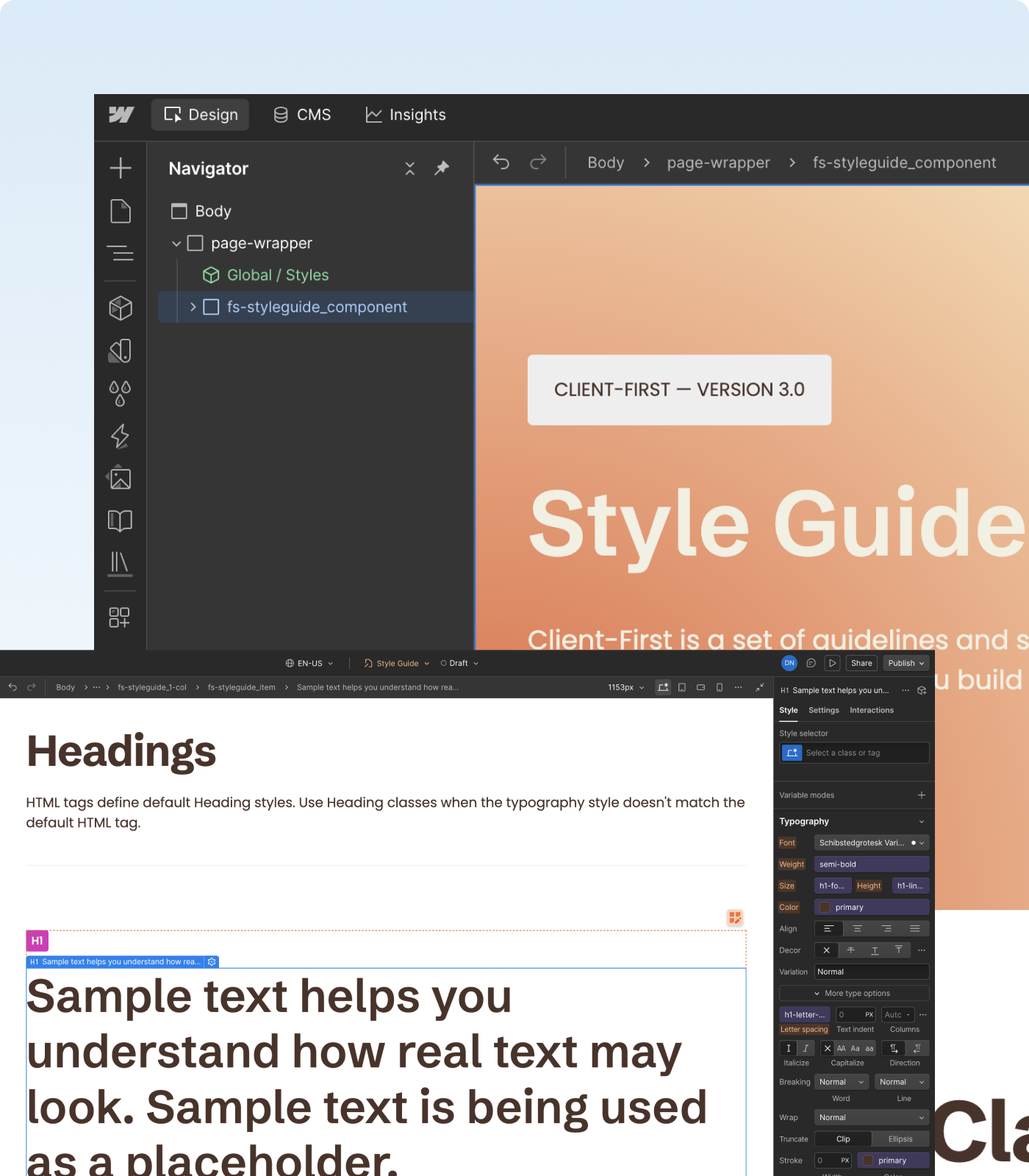
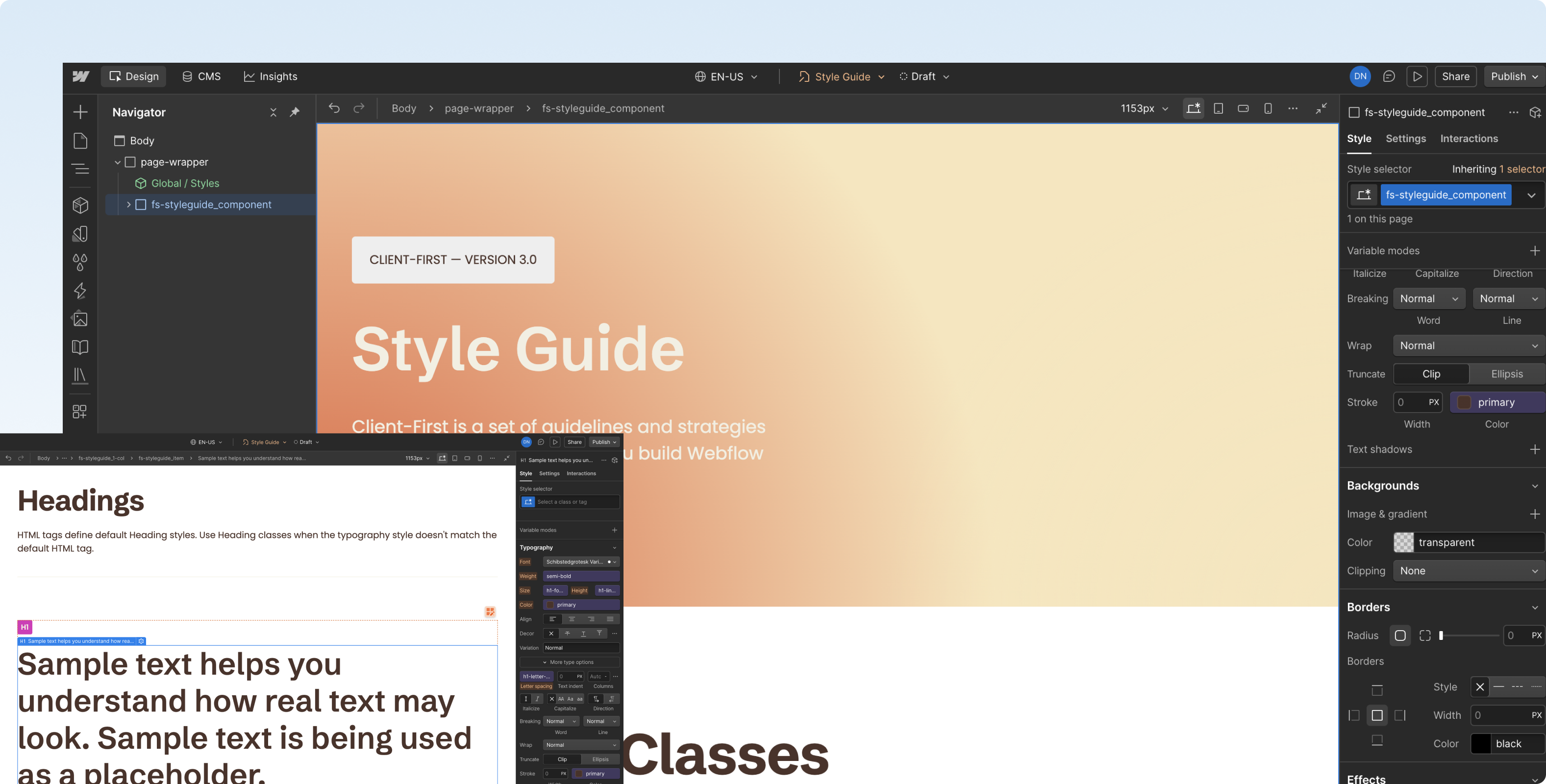
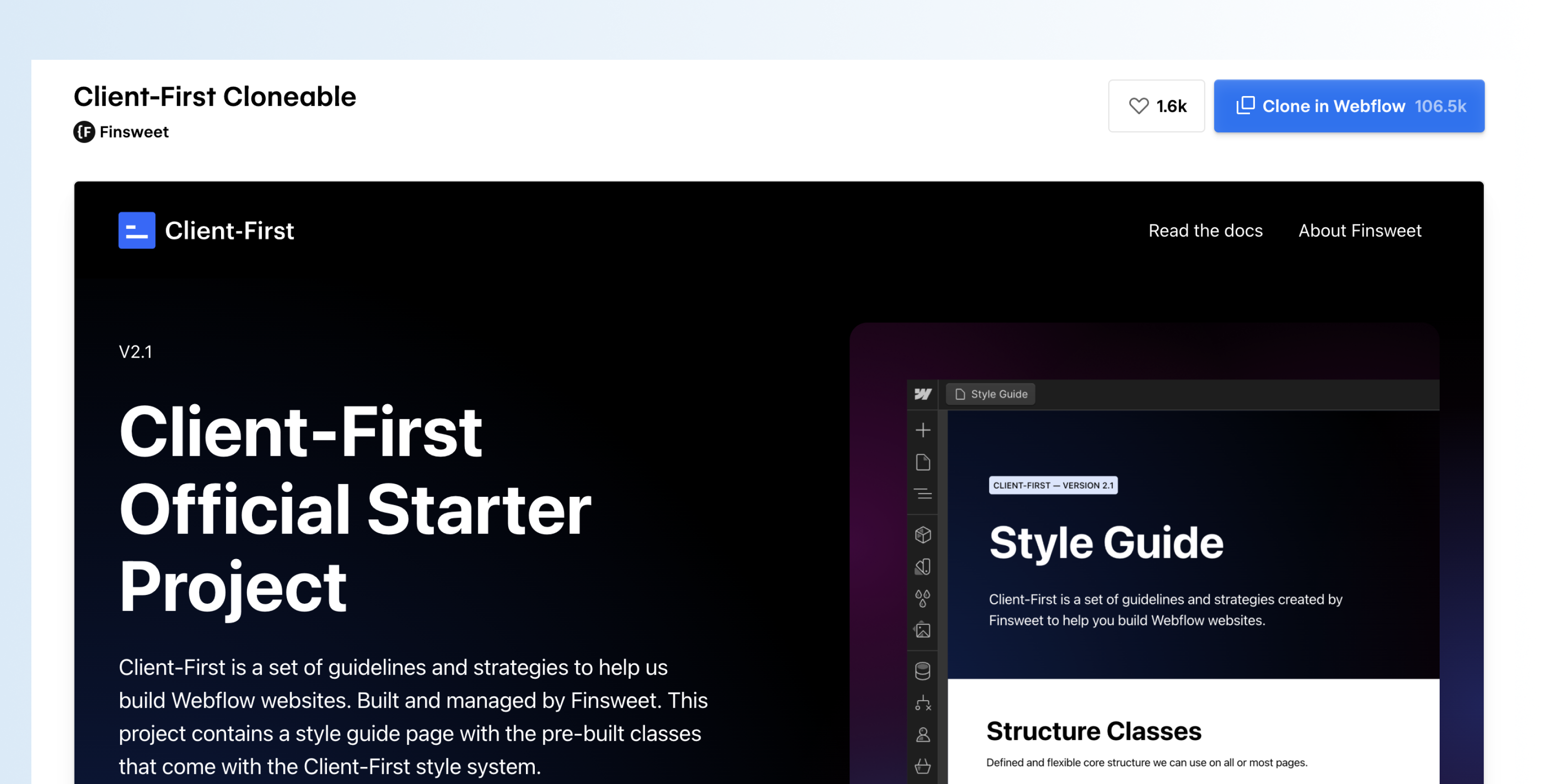
Every Client-First project includes a dedicated style guide. This acts as the design system for the website, documenting typography, colors, buttons, form elements, spacing, and reusable components. A well-maintained style guide helps:
- Keep designs consistent.
- Speed up development.
- Simplify collaboration.
- Reduce design inconsistencies.
- Make future updates easier.
Instead of recreating styles every time a new page is added, developers and designers can reference the same system.
Why We Use Client-First at Ngo Studio
At Ngo Studio, every website we build follows Client-First. We don't use it because it's trendy. We use it because it creates better websites for our clients. Building with Client-First means your website is easier to understand, easier to update, and easier to scale as your business grows. If another developer joins the project in the future, they'll already be familiar with the structure. If your marketing team wants to add new pages or update content, they'll be working with a logical and consistent system rather than a collection of randomly named classes. Most importantly, Client-First allows us to spend less time organizing projects and more time designing exceptional digital experiences.